


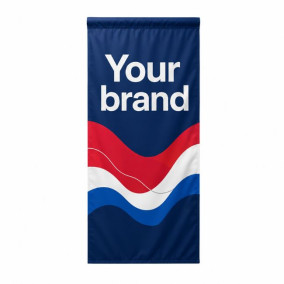
Advertising flag with tunnel 60 x 90 cm
Advertising banner with tunnel 60 x 90 cm, made of PES flag fabric with double stitching. Ideal for outdoor and indoor use.
48,81 €
(60,04 incl. VAT)
Product detail● Regularly in stock
Advertising flags with a tunnel offer an effective solution for highlighting your brand. Ideal for events, exhibitions, and marketing campaigns.
Advertising banner with tunnel 60 x 90 cm, made of PES flag fabric with double stitching. Ideal for outdoor and indoor use.
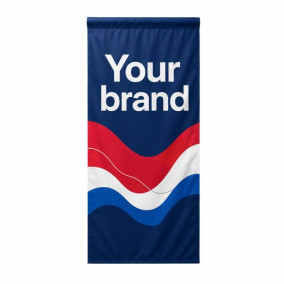
Advertising flag with tunnel 80 x 120 cm made of PES banner fabric, edged with double stitching. Ideal for outdoor and indoor use.
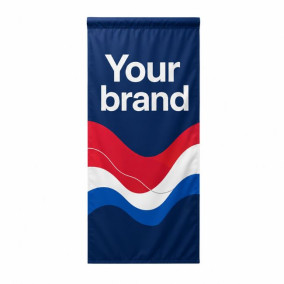
Advertising banner with tunnel 100 x 150 cm, printed on high-quality PES flag fabric, ideal for both outdoor and indoor use.
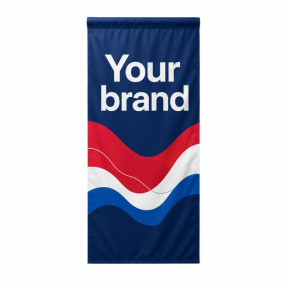
Advertising banner with tunnel 100 x 200 cm, made of PES flag fabric with double stitching. Ideal for outdoor advertising.
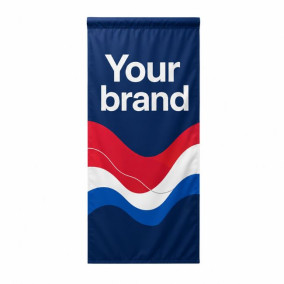
Advertising flag with tunnel 150 x 225 cm made of PES flag fabric, edged with double stitching. Ideal for outdoor use.
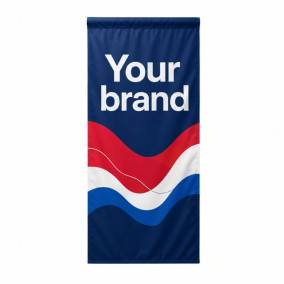
Advertising banner with tunnel 100 x 300 cm, made of PES flag fabric, durable and high-quality for your marketing needs.
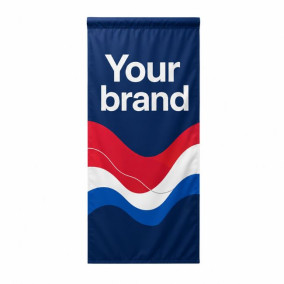
Advertising banner with tunnel 150 x 300 cm, made of high-quality PES flag fabric. Ideal for both outdoor and indoor use.
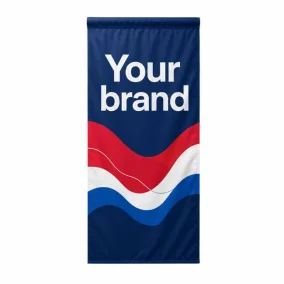
An advertising flag with a tunnel is used where the graphics need to be securely attached to the pole and should not move freely as with a carabiner system. Typically, this is for indoor use, presentation spaces, building entrances, or exteriors on fixed poles without a rope mechanism.
A tunnel is a reinforced textile edge created by sewing the fabric to form a space for sliding onto a pole or rod. In practice, it is a simple principle, but its precision determines whether the flag retains its shape or deforms over time.
The width of the tunnel, the quality of the stitching, and the precise fitting of the pole diameter are crucial. Any deviation will manifest during use – either through complicated handling or an unstable position of the flag.
They are most commonly used in company interiors, showrooms, receptions, meeting rooms, or at presentation events. Externally, they appear mainly where there is a fixed pole without a rope system.
In practice, they are often chosen where the flag is meant to appear representative and visually "clean," without visible carabiners or technical elements.
Polyester flag fabric with a weight of approximately 110 to 160 g/m² is most commonly used. The material must be light enough to easily slide onto the pole, yet strong enough to maintain its shape.
The tunnel is one of the most stressed parts of the flag, as it bears its entire weight in one line. If not properly reinforced, it can gradually stretch or deform the edge.
Unlike carabiners, which allow movement in the wind, the tunnel fixes the flag in a stable position. This means less dynamics but a more accurate display of the logo or symbol.
In practice, this is advantageous where readability and a representative appearance without wind-induced deformation are important.
The most important parameter is the pole diameter. This determines the width of the tunnel and the ease of handling. A tunnel that is too tight complicates mounting, while one that is too loose reduces stability.
It is also important how often the flag will be changed. With frequent handling, the quality of reinforcement matters, as repeated friction is the most common cause of wear.
In practice, consistency in production is also addressed to ensure that flags can be supplemented in the same design even after years.
The main reason is visual simplicity. Without carabiners and metal elements, the flag appears cleaner and fits better into the architectural environment.
In B2B practice, it is used especially where the flag is meant to represent the brand long-term without frequent replacement or relocation.