


Custom-designed advertising flags
Custom advertising flags according to your own design. Create unique flags for your brand and impress your customers.
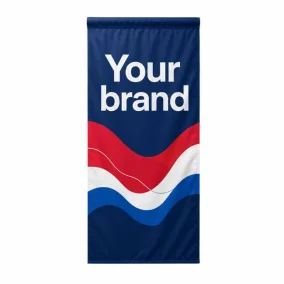
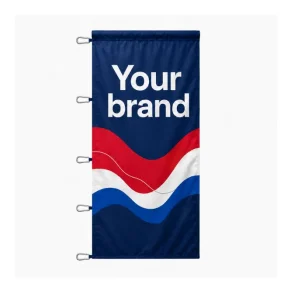
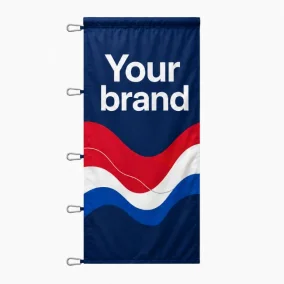
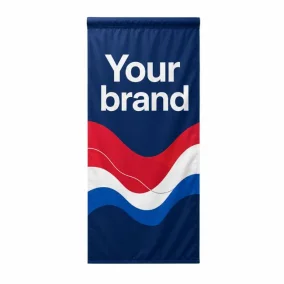
Custom Design Advertising Flags: When the Visual Needs to Work in Space, Not Just on Screen
A custom design advertising flag is a textile carrier that brings corporate identity into the real environment – in front of businesses, at events, or in areas. Unlike static graphics, it works with movement, wind, and distance, so the design must be created to remain readable even with the constant motion of the material.
What Custom Design Production Means
This is a process where the flag is produced exactly according to the provided graphics or modified brand design. It can involve a logo, color identity, or a combination of visual elements that adapt to a specific size and mounting method.
In practice, the design is often adjusted because the flag behaves differently than classic digital or printed materials – it is in motion, and the visual constantly changes.
How the Flag Behaves in Real Environments
The flag is constantly exposed to wind, which affects readability and brand perception. Texts may overlap, logos may distort, and colors change according to light and the movement of the fabric.
Therefore, the design also addresses how the visual will look in different stages of unfolding, not just in an ideal static state.
Material and Production Technology Determine the Outcome
The most commonly used material is polyester flag fabric with a weight of approximately 110 to 160 g/m². The material must be light enough to work with the wind but also resistant to UV radiation and mechanical stress.
Printing technology plays a significant role – it affects how long the visual remains readable and how stable the colors will be during long-term outdoor use.
- UV-resistant and color-stable printing,
- air permeability to reduce wind load,
- strong stitching and reinforced edges,
- precise preservation of corporate colors,
- various size options depending on use.
What Decides the Design of the Flag
The most important factors are simplicity and contrast. The flag is perceived from a distance and in motion, so detailed graphics and small texts lose readability.
In practice, large areas, strong colors, and minimal text work best. Orientation is also an important factor – vertical flags behave differently than horizontal ones and change how the logo is perceived.
One of the less obvious decision-making factors is the surroundings – the flag must function in the context of the building, light, and space, not just as an isolated object.
Why Companies Use Advertising Flags
The flag is one of the few formats that is constantly visible without active human attention. It functions as both a static and dynamic element simultaneously and naturally attracts attention through movement.
In the B2B environment, it is used to mark headquarters, entry zones, sales points, or events, helping with quick orientation and building the visual identity of the brand in space.
When Custom Design is Worth It
Custom design makes sense when a brand has a long-term presence in multiple locations or needs a consistent visual system. In such cases, the flag is not just decoration but part of the identity of the environment.
The biggest difference in practice arises with repeated production – a well-prepared design allows for the reproduction of the same visual without deviations in colors and details.