


Flags of the Slovak Republic
Quality flags of the Slovak Republic in various sizes and materials. Ideal for celebrations, events, and decorations. Shop now!

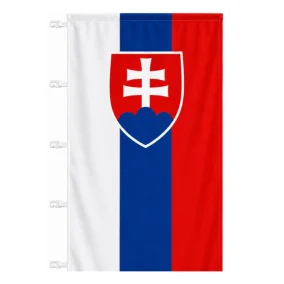
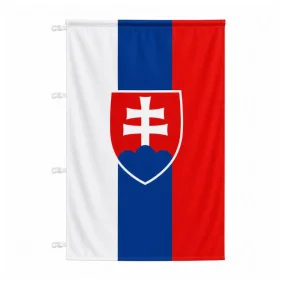
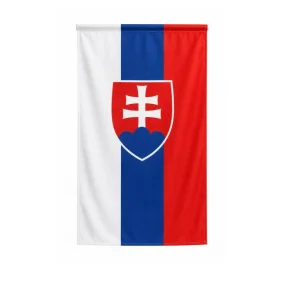
Flag of the Slovak Republic – how to choose the right attachment for a flagpole, facade, or representative space
The flag of the Slovak Republic is one of the basic representative elements of state institutions, local governments, schools, cultural organizations, and corporate headquarters. When choosing, not only the size matters, but primarily the method of attachment. This determines where and how the flag can be used.
Flags are most commonly made with a sleeve, with carabiners, or in a combined version with both a sleeve and carabiners. Each solution is intended for a different method of installation and use.
What is the difference between a flag and a banner
A banner is primarily designed for secure attachment to a flagpole, mast, or supporting structure. Unlike a traditional flag, the method of attachment is designed to keep it properly oriented and visible even in light winds.
In practice, banners are mainly used on the buildings of offices, schools, public institutions, and at official state occasions.
Banner with a sleeve – a simple solution for poles and facade holders
A banner with a sleeve is equipped with a textile sleeve on the shorter side. A pole or supporting structure is threaded through this sleeve, creating a simple and visually clean attachment without additional connecting elements.
This solution is often used on facade holders, wall brackets, or interior representative setups. The advantage is quick installation and minimal maintenance requirements.
Available sizes with a sleeve:
- 60 × 90 cm,
- 80 × 120 cm,
- 100 × 150 cm,
- 100 × 200 cm,
- 150 × 225 cm,
- 100 × 300 cm,
- 150 × 300 cm.
Banner with carabiners – standard for flagpoles
The carabiner attachment is one of the most common solutions for outdoor flagpoles. The banner is equipped with carabiners on the long side, which connect it to the line running in the flagpole.
The advantage is easy raising and lowering of the banner without the need to manipulate the entire structure. For this reason, this system is used on most public and corporate flagpoles.
Available sizes with carabiners:
- 60 × 90 cm,
- 100 × 150 cm,
- 150 × 225 cm.
Combination of sleeve and carabiners – a universal solution
Banners equipped with both a sleeve and carabiners offer the greatest flexibility of use. Carabiners for flagpole systems are located on the long side, and a sleeve for attachment to a pole or arm is on the shorter side.
This design is often used in organizations that need to move banners between different types of supporting systems or use multiple presentation methods throughout the year.
Available sizes:
- 60 × 90 cm,
- 100 × 150 cm,
- 150 × 225 cm.
Why double stitching is important
In outdoor banners, the greatest stress occurs at the edges of the material. Therefore, banners are double-stitched around the entire perimeter, which increases strength and resistance to tearing.
In practice, the quality of stitching often determines the lifespan of the banner. With year-round use, double stitching can significantly delay edge wear caused by wind.
Advantages of dispersion printing for state banners
Banners are produced using dispersion printing, where the color is transferred directly into the structure of the fabric. This keeps the color areas vivid, the details of the state emblem clearly readable, and the banner maintains its representative appearance over time.
This technology is among the most commonly used methods for producing high-quality outdoor flags and banners intended for everyday use.
How to choose the right size
The size should always correspond to the height of the flagpole or the size of the building. A flag that is too small on a tall flagpole loses its visual effect, while an excessively large format can create unnecessary strain in strong winds.
For most local governments, schools, and corporate headquarters, the size of 100 × 150 cm represents the most universal solution. For large objects or representative spaces, sizes of 150 × 225 cm or 150 × 300 cm are more commonly used.