


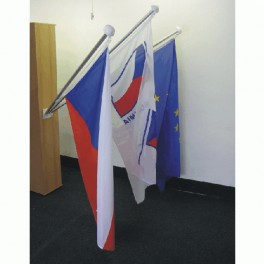
Facade flag holder - 3-arm exclusive, stand only, flag not included
Facade flag holder with a steel base and anodized aluminum pole, customizable in color according to RAL.
305,78 €
(376,11 incl. VAT)
Product detail● Regularly in stock
Facade holder with 3 arms, exclusive design for a sturdy and aesthetic attachment. Ideal for modern facades and architectural applications.
Facade flag holder with a steel base and anodized aluminum pole, customizable in color according to RAL.
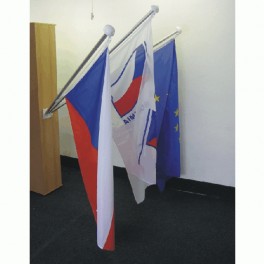
Facade flag holder with 3 arms, steel base, and anodized aluminum pole 170 cm. Color customization options available.
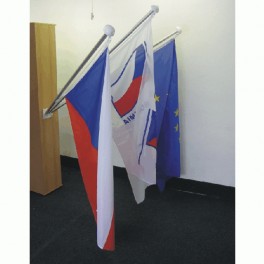
Facade flag holder with 3 arms, steel base, anodized aluminum pole 170 cm, customizable in color.
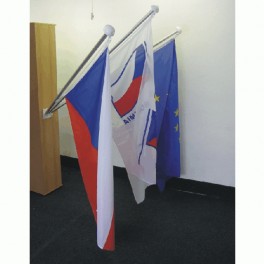
Facade flag holder with 3 arms, steel base, and anodized aluminum pole 170 cm for Slovak and EU flags
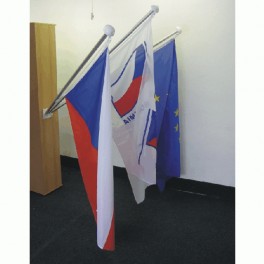
Facade flag holder with 3 arms, aluminum pole, and customizable color options. Includes the Slovak flag and a personal flag.
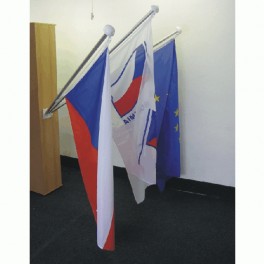
Facade flag holder with 3 arms, steel base, anodized aluminum pole 170 cm, EU flag and custom flag. RAL customization.
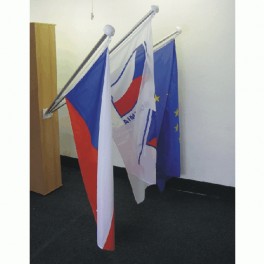
Facade flag holder with 3 arms, steel base, and flags of Slovakia, EU, and custom. Color customization according to RAL.
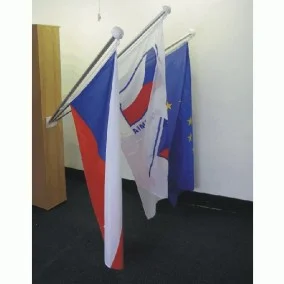
A three-armed facade flag holder allows for the placement of three separate flags on one mounting position on the building's facade. It is primarily used where it is necessary to simultaneously display the national flag, the European Union flag, and a company or city flag without the need to build separate flagpoles.
The construction consists of a steel base with four mounting holes and three separate aluminum arms. Each arm is 170 cm long, has a diameter of 30 mm, and is inclined at 45 degrees. The steel base is protected by a white powder-coated finish, while the arms are made of anodized aluminum, which resists corrosion and long-term exposure to weather conditions.
In a single or double-arm system, there is often a need to add additional anchoring points on the facade. The three-arm design allows for the presentation of multiple identification elements of the building from one location, which maintains a uniform appearance and reduces interventions in the facade.
From the perspective of the building's architecture, the trio of flags appears more balanced than several separate holders placed next to each other. For this reason, this solution is often used in administrative centers, large companies, universities, hotels, and public institutions.
It is most commonly used in buildings that communicate multiple identities at once. This can involve a combination of national affiliation, membership in the European Union, and the organization's own brand.
In practice, we often encounter a combination of the Slovak flag, the European Union flag, and the company flag. Such a solution is common at manufacturing plants of foreign companies, technology parks, or headquarters of international organizations.
An important detail is also visual consistency. If all three flags are the same size of 100 × 150 cm, they create a harmonious whole, and the building appears more representative.
In facade flag systems, the load-bearing part and the connection between the base and the arms are usually the most stressed. The steel base ensures a firm anchoring to the facade, while anodized aluminum minimizes the risk of corrosion and reduces the overall weight of the construction.
A practical advantage is the rope guide integrated into each arm. Changing flags is simpler and does not require the disassembly of individual poles. With regular use, this significantly shortens the time needed for maintenance.
For orders over 10 pieces, the base can be color-customized according to the RAL color chart. This option is mainly utilized by development projects, hotel chains, or organizations with a precisely defined visual standard.
The holder itself without flags is suitable for organizations that already own flags or regularly change them.
The most commonly ordered sets include the national flag of the Slovak Republic, the European Union flag, or their combination with the organization's own graphic design. The choice mainly depends on the character of the organization and how it presents itself externally.
From a practical standpoint, the most advantageous combination is three different flags. A visitor or business partner can immediately identify the country, the international context, and the specific organization without the need for further signage on the building.
Flags are among the elements that are continuously visible and create a first impression even before entering the building. For larger companies or public institutions, it is a standard way to mark their headquarters.
The costs of a quality holder are relatively low compared to the lifespan of the construction. More important is to ensure wind resistance, easy flag replacement, and reliable anchoring that will not require frequent maintenance interventions.