


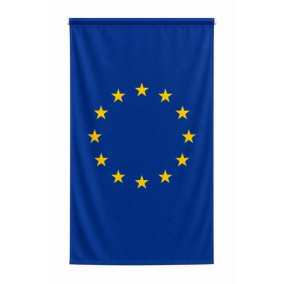
European Union flag with tunnel 60 x 90 cm
European Union flag with tunnel, high-quality PES flag, size 60 x 90 cm up to 150 x 300 cm, edged with double stitching.
37,61 €
(46,26 incl. VAT)
Product detail● Regularly in stock
Quality EU flags with a tunnel, ideal for both outdoor and indoor use. A wide selection and various sizes for every occasion.
European Union flag with tunnel, high-quality PES flag, size 60 x 90 cm up to 150 x 300 cm, edged with double stitching.
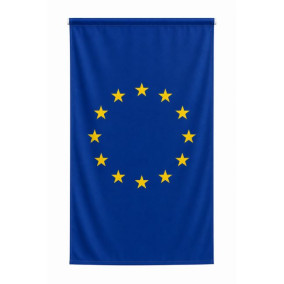
Flag of the European Union with a tunnel 80 x 120 cm, made of PES flag fabric, durable and well crafted. Ideal for outdoor use.
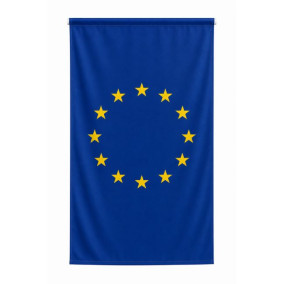
European Union flag with tunnel 100 x 150 cm, made from high-quality PES flag fabric, edged with double stitching. Available in various sizes.
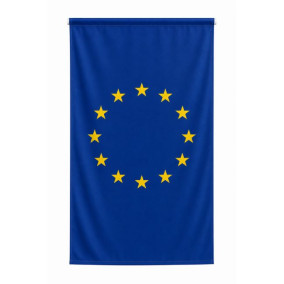
European Union flag with tunnel 100 x 200 cm, made of high-quality PES flag fabric, durable and meticulously crafted.
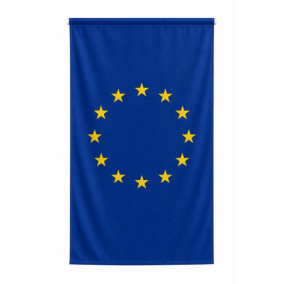
EU flag with tunnel 100 x 300 cm, made of high-quality PES banner fabric, durable and precisely sewn. Ideal for outdoor use.
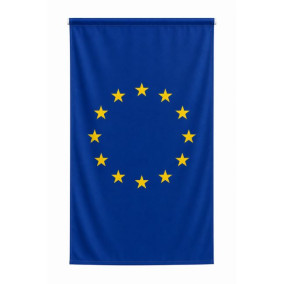
The European Union flag with a 150 x 225 cm tunnel, made from PES flag fabric, durable and well crafted. Perfect for outdoor use.
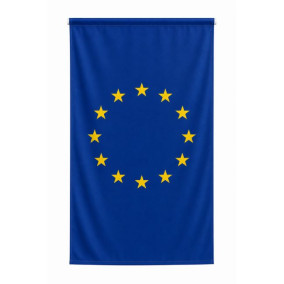
European Union flag with tunnel 150 x 300 cm, made of PES banner material, with double-stitched edging. Ideal for outdoor use.
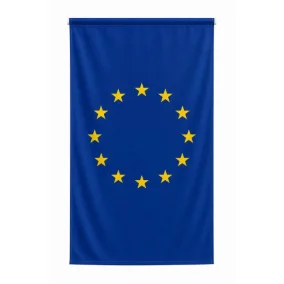
The European Union flag with a tunnel is designed for attachment using a pole or bracket, through which a reinforced textile sleeve is threaded on the shorter side. This solution is among the most commonly used for public administration buildings, schools, universities, cultural institutions, and administrative objects.
The advantage of tunnel attachment is the even distribution of load across the entire width of the flag. The material is not stressed at just a few points, which helps reduce wear during long-term use.
A flag with a tunnel is a textile flag equipped with a reinforced sleeve on one side, allowing for easy threading onto a support pole. The tunnel ensures a secure connection between the flag and the structure without the need for additional fastening elements.
This method of attachment is primarily used on facade holders, brackets, and interior stands, where a stable position of the flag is required.
In facade attachment, it is important for the flag to remain properly oriented and not twist around the pole. The tunnel provides stability along the entire length of the attachment and helps maintain a representative appearance even with daily use.
In practice, this is a solution that requires minimal maintenance and allows for easy flag replacement without the need for special tools.
A lesser-known factor is that with larger dimensions, the tunnel can distribute the load significantly more evenly than point attachment. This positively affects the lifespan of the seams and the material itself.
The flag is made using dispersion printing, which is one of the most commonly used technologies for producing outdoor textile flags. The color penetrates directly into the polyester fibers, ensuring good visibility of the motif from both sides.
A flag produced this way retains a low weight, natural movement in the wind, and does not overload the supporting structure more than necessary.
The greatest mechanical stress occurs at the edges of the flag. Double stitching helps reinforce the most stressed parts and reduces the risk of gradual tearing or damage to the material.
For year-round outdoor use, the quality of the seams is one of the most important factors affecting the lifespan of the flag.
The size of the flag should correspond to the dimensions of the building, the height of attachment, and the distance from which it will be observed.
When choosing, it is also worth considering the orientation of the building relative to the wind. In exposed locations, it is often wiser to use a smaller size that will be less stressed and maintain a longer lifespan.
This type of flag is used on buildings of state administration, local governments, schools, universities, cultural institutions, and organizations involved in European projects. It often forms part of the official designation of objects or representative entrance areas.
In the business environment, it is primarily used by companies collaborating with European partners or in projects funded by European Union funds.