


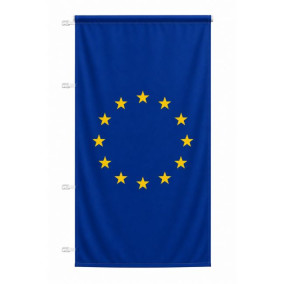
European Union flag with clips and tunnel 60 x 90 cm
European Union flag with clips and tunnel, 60 x 90 cm, made of quality PES flag fabric. Perfect for hanging on a pole.
41,40 €
(50,92 incl. VAT)
Product detail● Regularly in stock
High-quality EU flags with carabiners and a tunnel, ideal for outdoor use. Durable materials and various sizes for all needs.
European Union flag with clips and tunnel, 60 x 90 cm, made of quality PES flag fabric. Perfect for hanging on a pole.
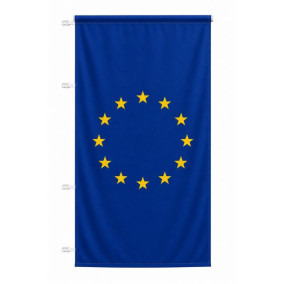
EU flag with clips and tunnel 100 x 150 cm, made of PES flag fabric with double stitching, ideal for hanging.
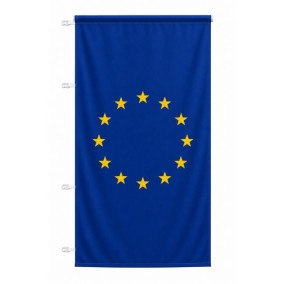
European Union flag with carabiners and tunnel, size 150 x 225 cm, high-quality PES flag with double stitching.
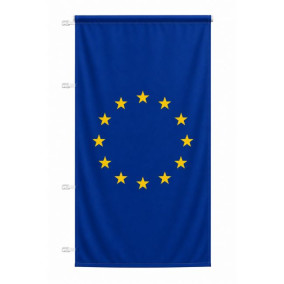
European Union flag 150 x 300 cm with clips and sleeve, made from high-quality PES banner fabric. Ideal for outdoor use.
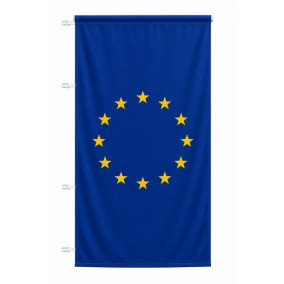
European Union flag with clips and tunnel, 150 x 400 cm. High-quality PES banner with double stitching, ideal for hanging.
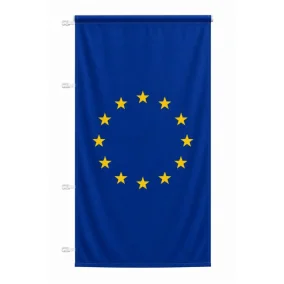
The flag of the European Union with carabiners and a tunnel combines two attachment methods into one solution. Carabiners allow for hanging on a mast system, and the tunnel on the short side serves to mount an arm or boom that helps keep the flag unfurled even in minimal wind.
This is why this type of flag is used in places where continuous visibility of the European Union symbol is important. This includes public administration buildings, universities, representative offices of organizations, cultural institutions, and facilities funded by European programs.
Carabiners secure the flag to the rope or lifting mechanism of the mast. The tunnel creates a space for inserting a horizontal arm, which helps keep the flag taut and more readable.
The result is a system that combines the easy handling of traditional mast flags with better presentation of the motif during calm weather.
With standard mast flags, the motif remains well visible mainly in sufficient wind. When the wind dies down, the fabric naturally falls along the mast, and the symbol may not be easily recognizable from a greater distance.
The combination of carabiners and tunnel significantly mitigates this problem. The arm placed in the tunnel helps keep the flag unfurled and ensures a representative appearance throughout most of the day.
In practice, this is a solution often used on buildings with high foot traffic or where visual presentation is part of the official protocol.
The flag is made using dispersion printing, where the color is transferred directly into the structure of the polyester fibers. This ensures that the motif remains well visible from both sides and the material retains a low weight.
Low weight is important for larger sizes as it reduces the load on the mast, arm, and the attachment itself during windy weather.
The greatest stress occurs at the edges of the flag, where there is constant movement of the material. Double stitching around the entire perimeter helps reinforce exposed parts and reduces the risk of damage during long-term use.
For large sizes and year-round display, the quality of stitching is one of the most important factors affecting the flag's lifespan.
The size of the flag should correspond to the height of the mast, the size of the building, and the distance from which it will be visible.
A less known factor in choosing is the length of the arm placed in the tunnel. For larger sizes, the construction must be sufficiently sturdy to handle the combined load of wind and the weight of the fabric.
Flags with carabiners and a tunnel are primarily used on modern masts with booms that ensure permanent visibility of the motif. Such systems are common in front of public institutions, universities, international organizations, and significant administrative buildings.
For organizations, they represent a way to ensure a representative appearance throughout the year, regardless of current weather conditions.